HARAM
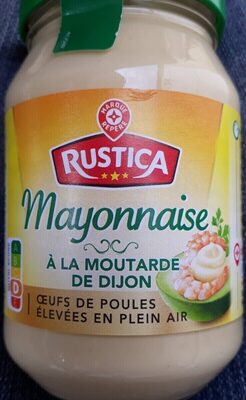
Mayonnaise bocal A la moutarde de Dijon
Marque Repère, Rustica
Barcode
3564700633656
Category
Condiments, Sauces, Mayonnaises, Mayonnaises de Dijon, en:groceries
Manufactured In
-
Ingredients
huile de colza
eau
moutarde de dijon
eau
graines de moutarde
vinaigre d'alcool
sel
acidifiant
acide citrique
conservateur
disulfite de potassium
jaune d'œufs liquide
jaune d'œufs en poudre
vinaigre d'alcool
sel
vinaigre de vin blanc
dont conservateur
disulfite de potassium
sucre
arômes
amidon modifié de maïs
sirop de glucose
acidifiant
acide citrique
colorant
bêta-carotène
stabilisant
gomme xanthane
antioxydant
e385
Status: HALAL
Reason: Canola oil, plant-based and halal.
Uses: cooking, frying, salad dressings
Status: HALAL
Reason: Pure water, universally acceptable.
Uses: solvent, ingredient in food
Status: HARAM
Reason: Contains vinaigre d'alcool (alcoholic vinegar), which is derived from alcohol, making it Haram.
Uses: Commonly used as a condiment in various dishes and sandwiches.
Status: HALAL
Reason: Pure water, universally acceptable.
Uses: solvent, ingredient in food
Status: HALAL
Reason: Mustard seeds, plant-derived ingredient.
Status: HARAM
Reason: It is derived from alcohol, which is considered haram in Islam.
Uses: Commonly used as a condiment, in salad dressings, and for cooking.
Status: MASHBOOH
Reason: Not a specific ingredient; may refer to salt in different contexts or forms that could include additives.
Uses: Commonly used as a seasoning or preservative.
Status: HALAL
Reason: Commonly used in food, often from natural sources.
Uses: food preservation, flavor enhancement
Status: HALAL
Reason: Citric acid is plant-derived and halal.
Uses: acidulant in food and beverages
Status: UNKNOWN
Reason: Generic term for preservatives, requires specific additive info.
Status: MASHBOOH
Reason: The status of potassium bisulfite as halal or haram can be unclear due to its potential sources and processing methods. Its use as a preservative raises questions as it may be derived from processes that involve non-halal substances.
Uses: Used as a preservative in food and beverages to prevent spoilage and browning.
Status: UNKNOWN
Status: UNKNOWN
Status: HARAM
Reason: It is derived from alcohol, which is considered haram in Islam.
Uses: Commonly used as a condiment, in salad dressings, and for cooking.
Status: MASHBOOH
Reason: Not a specific ingredient; may refer to salt in different contexts or forms that could include additives.
Uses: Commonly used as a seasoning or preservative.
Status: UNKNOWN
Status: UNKNOWN
Status: MASHBOOH
Reason: The status of potassium bisulfite as halal or haram can be unclear due to its potential sources and processing methods. Its use as a preservative raises questions as it may be derived from processes that involve non-halal substances.
Uses: Used as a preservative in food and beverages to prevent spoilage and browning.
Status: HALAL
Reason: Natural sweetener, derived from sugarcane or sugar beet.
Uses: sweetening, baking
Status: MASHBOOH
Reason: The term 'arômes' refers to flavorings which can be derived from both halal and haram sources, making its status uncertain without specific details.
Uses: Used in food and beverage products for flavor enhancement.
Status: UNKNOWN
Status: HALAL
Reason: Derived from plant starch, no animal origin.
Uses: sweetener in confections
Status: HALAL
Reason: Commonly used in food, often from natural sources.
Uses: food preservation, flavor enhancement
Status: HALAL
Reason: Citric acid is plant-derived and halal.
Uses: acidulant in food and beverages
Status: MASHBOOH
Reason: Varies widely depending on specific type.
Status: UNKNOWN
Status: UNKNOWN
Reason: Vague term, could refer to various additives.
Status: HALAL
Reason: Xanthan gum is commonly used as a thickener.
Uses: thickener, stabilizer
Status: MASHBOOH
Reason: Generic term; needs specification for exact identity.
Uses: preventing oxidation in food
Status: MASHBOOH
Reason: E385 is a food additive, also known as calcium stearoyl lactylate, whose halal status may vary based on its source (animal or plant). Without specific information about its origin, it is considered Mashbooh.
Nutrition Facts
carbohydrates
1.3
carbohydrates_100g
1.3
carbohydrates_serving
0.13
carbohydrates_unit
g
carbohydrates_value
1.3
carbon-footprint-from-known-ingredients_100g
35.88