HARAM
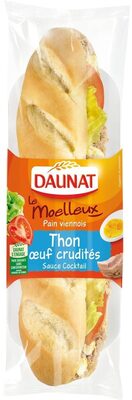
Sandwich jambon cheddar
DAUNAT
Barcode
13676513
Category
Sandwichs, Sandwichs garnis de charcuteries, Sandwichs au fromage, Sandwichs au jambon, Sandwichs au cheddar, Sandwichs Jambon Fromage
Manufactured In
-
Ingredients
galette de blé aux graines de lin
farine de blé
eau
huile de colza
graines de lin
poudres à lever
e500
e450
dextrose
acidifiant
e296
sel
garniture
sauce burger
huile de colza
eau
moutarde
eau
vinaigre
graines de moutarde
sel
acidifiant
e330
sucre
épice
antioxydant
disulfite de potassium
extraits naturels d'épices
sucre
vinaigre
concentré de tomates
amidon transformé de pommes de terre
sel
jaune d'oeuf
ail
jus de citron concentré
ciboulette
persil
épaississants
gomme de xanthane
e466
conservateur
sorbate de potassium
jambon cuit
jambon de porc
eau
sel
dextrose sirop de glucose
arôme
stabilisants
e451
e450
antioxydant
erythorbate de sodium
conservateur
e250
salade
cheddar fondu
cheddar
fromages
eau
protéines de lait
beurre
sels de fonte e331
e452
colorant
e160b
sel
tomates
Status: UNKNOWN
Status: HALAL
Reason: Farine de blé (wheat flour) is derived from wheat, which is considered halal.
Uses: Commonly used in baking, cooking, and food production.
Status: HALAL
Reason: Water is always Halal.
Uses: solvent, ingredient
Status: HALAL
Reason: Rapeseed oil is generally considered halal.
Status: HALAL
Reason: Graines de lin are plant-based and do not contain any haram substances.
Uses: Graines de lin are commonly used in baking, smoothies, and as a source of omega-3 fatty acids.
Status: MASHBOOH
Reason: Contains diphosphates and carbonates which may have uncertain halal sources.
Uses: Leavening agent
Status: HALAL
Reason: Sodium carbonates and bicarbonates, used as leavening agents.
Uses: leavening in baked goods
Status: HALAL
Reason: Sodium and potassium phosphates, used as a leavening agent.
Uses: leavening agent in baking
Status: HALAL
Reason: Common sweetener, derivable from plants.
Uses: sweetener
Status: HALAL
Reason: Generally refers to food acids, usually halal.
Uses: acidulant
Status: HALAL
Reason: Regulator of acidity derived from various sources.
Uses: acid regulator in food products
Status: HALAL
Reason: Common food ingredient, universally accepted.
Uses: flavoring, preserving
Status: UNKNOWN
Reason: General term; no specific ingredients provided.
Status: UNKNOWN
Status: HALAL
Reason: Rapeseed oil is generally considered halal.
Status: HALAL
Reason: Water is always Halal.
Uses: solvent, ingredient
Status: HALAL
Reason: Plant-based ingredient from mustard seeds.
Uses: used in sauces, dressings
Status: HALAL
Reason: Water is always Halal.
Uses: solvent, ingredient
Status: HALAL
Reason: Derived from fermentation, generally accepted as halal.
Uses: preservative, flavoring, condiment
Status: HALAL
Reason: Mustard seeds are plant-based.
Status: HALAL
Reason: Common food ingredient, universally accepted.
Uses: flavoring, preserving
Status: HALAL
Reason: Generally refers to food acids, usually halal.
Uses: acidulant
Status: HALAL
Reason: Citric acid, plant-derived and widely used.
Uses: acidulant in drinks, foods
Status: HALAL
Reason: Common sugar, halal.
Uses: sweetener, flavor enhancer
Status: MASHBOOH
Reason: The term 'épice' refers to spices in general, which can vary and may include both halal and haram ingredients depending on the specific spice and its processing.
Uses: Commonly used as flavoring in various cuisines.
Status: MASHBOOH
Reason: Generic term; needs specification for exact identity.
Uses: preventing oxidation in food
Status: MASHBOOH
Reason: The status of potassium bisulfite as halal or haram can be unclear due to its potential sources and processing methods. Its use as a preservative raises questions as it may be derived from processes that involve non-halal substances.
Uses: Used as a preservative in food and beverages to prevent spoilage and browning.
Status: UNKNOWN
Status: HALAL
Reason: Common sugar, halal.
Uses: sweetener, flavor enhancer
Status: HALAL
Reason: Derived from fermentation, generally accepted as halal.
Uses: preservative, flavoring, condiment
Status: UNKNOWN
Status: UNKNOWN
Status: HALAL
Reason: Common food ingredient, universally accepted.
Uses: flavoring, preserving
Status: HALAL
Reason: Egg yolk, animal origin but permissible.
Status: MASHBOOH
Reason: The ingredient 'ail' is not a standard or commonly recognized ingredient. It may refer to garlic in some contexts, which is generally considered halal, but its ambiguous state makes it uncertain.
Uses: Garlic is commonly used as a flavoring agent in various cuisines.
Status: UNKNOWN
Status: HALAL
Reason: Common culinary herb, no non-halal concerns.
Status: HALAL
Reason: Common culinary herb, no non-halal concerns.
Status: UNKNOWN
Status: HALAL
Reason: Xanthan gum is a polysaccharide used as a food thickener and is derived from fermented sugars.
Uses: Used in food products as a thickener, emulsifier, and stabilizer.
Status: HALAL
Reason: Sodium carboxymethyl cellulose, derived from plant cellulose.
Uses: thickener in sauces, dressings
Status: MASHBOOH
Reason: Requires specification of the type of preservative used.
Status: HALAL
Reason: Sorbate de potassium (potassium sorbate) is a widely used food preservative that is considered halal as it is synthetically produced and does not contain any animal products or alcohol.
Uses: It is commonly used to inhibit the growth of mold, yeast, and fungi in various food products, as well as in cosmetics and personal care items.
Status: UNKNOWN
Status: UNKNOWN
Status: HALAL
Reason: Water is always Halal.
Uses: solvent, ingredient
Status: HALAL
Reason: Common food ingredient, universally accepted.
Uses: flavoring, preserving
Status: UNKNOWN
Status: MASHBOOH
Reason: Generic term; origin uncertain.
Uses: flavoring agent
Status: UNKNOWN
Reason: Generic term, not specific to a known ingredient.
Status: MASHBOOH
Reason: E451 is a food additive that can be derived from both plant and animal sources, making it uncertain in terms of halal status without specific sourcing information.
Status: HALAL
Reason: Sodium and potassium phosphates, used as a leavening agent.
Uses: leavening agent in baking
Status: MASHBOOH
Reason: Generic term; needs specification for exact identity.
Uses: preventing oxidation in food
Status: HALAL
Reason: Generally considered halal as it is a synthetic antioxidant derived from erythorbic acid.
Uses: Antioxidant, food preservative
Status: MASHBOOH
Reason: Requires specification of the type of preservative used.
Status: HARAM
Reason: E250, also known as sodium nitrite, is often derived from sources that may not be halal and is used as a preservative. Its use is generally discouraged in halal food products.
Status: UNKNOWN
Status: UNKNOWN
Status: HALAL
Reason: A dairy product, typically cheese.
Uses: cheese
Status: UNKNOWN
Status: HALAL
Reason: Water is always Halal.
Uses: solvent, ingredient
Status: HALAL
Reason: Protéines de lait sont dérivées du lait, qui est halal.
Uses: Utilisées dans les produits laitiers, les compléments protéinés et diverses recettes culinaires.
Status: MASHBOOH
Reason: Beurre is a French term for butter, which can be derived from milk of halal animals; however, the halal status may depend on the source of the milk and any additives used during processing.
Uses: Used as a cooking fat, spread, and in various recipes.
Status: UNKNOWN
Status: HALAL
Reason: Phosphates, used for emulsifying and stabilizing.
Uses: emulsifier in processed cheese
Status: MASHBOOH
Reason: Depends on specific colorant type used.
Status: HALAL
Reason: Annatto, natural colorant derived from seeds.
Uses: coloring agent in cheese
Status: HALAL
Reason: Common food ingredient, universally accepted.
Uses: flavoring, preserving
Status: HALAL
Reason: Tomatoes are a plant-based ingredient and permissible in Islam.
Uses: Commonly used in cooking, salads, sauces, and many other dishes.
Nutrition Facts
carbohydrates
24
carbohydrates_100g
24
carbohydrates_unit
g
carbohydrates_value
24
energy
924
energy-kcal
221