MASHBOOH
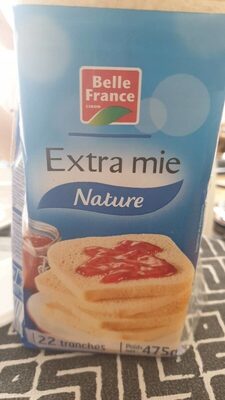
Extra mie nature
Belle France
Barcode
3258561400457
Category
en:aliments-d'origine-végétale, en:aliments-et-boissons-à-base-de-végétaux, en:céréales-et-pommes-de-terre, fr:pains, fr:pains-de-mie
Manufactured In
Unknown
Ingredients
farine de blé
eau
sucre
levure
huile de cozla
sel
gluten de blé
e282
e200
e471
e322
e481
e415
farine de fève
arôme
Status: HALAL
Reason: Farine de blé (wheat flour) is derived from wheat, which is considered halal.
Uses: Commonly used in baking, cooking, and food production.
Status: HALAL
Reason: Pure water has halal status.
Status: HALAL
Reason: General sugar is halal.
Uses: sweetener
Status: HALAL
Reason: Yeast used in baking, natural fermentation.
Uses: leavening agent in bread
Status: UNKNOWN
Status: HALAL
Reason: Common food ingredient, universally accepted.
Uses: flavoring, preserving
Status: HALAL
Reason: Gluten de blé is derived from wheat, which is a plant-based ingredient.
Uses: Used as a protein source in various food products, including bread, pasta, and meat substitutes.
Status: HALAL
Reason: Derived from propionic acid, commonly used as a preservative.
Uses: preservative in baked goods, dairy products
Status: MASHBOOH
Reason: E200 is a food additive (sorbic acid) which is generally considered safe, but its halal status can depend on the source and context of its production.
Status: HALAL
Reason: Emulsifier derived from plant and animal fats.
Uses: emulsifier in food products
Status: HALAL
Reason: Lecithin, derived from soy or egg, an emulsifier.
Uses: emulsifier in foods
Status: MASHBOOH
Reason: E481 refers to mono- and diglycerides of fatty acids, which can be derived from both animal and vegetable sources, making its halal status uncertain without further information.
Status: HALAL
Reason: Plant-based thickener and emulsifier.
Uses: thickening in sauces, dressings
Status: HALAL
Reason: Farine de fève, or fava bean flour, is a plant-based ingredient and does not contain any haram components.
Uses: Used in various culinary applications, including baking and cooking as a gluten-free flour substitute.
Status: MASHBOOH
Reason: Generic term; origin uncertain.
Uses: flavoring agent
Nutrition Facts
Energy per 100 g / 100 ml
281 kcal
Energy per 100 g / 100 ml
1176 kJ
Fat per 100 g / 100 ml
3.9 g
Saturated fat per 100 g / 100 ml
0.4 g
Carbohydrates per 100 g / 100 ml
51 g
Sugars per 100 g / 100 ml
7.6 g
Protein per 100 g / 100 ml
9.4 g
Salt per 100 g / 100 ml
1.1 g
Sodium per 100 g / 100 ml
0.44 g