MASHBOOH
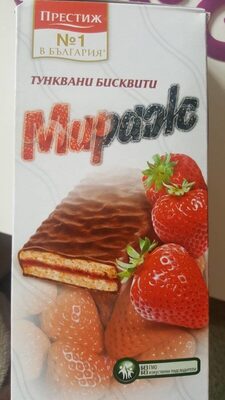
Мираж със сладко от ягоди
Престиж
Barcode
3800061605650
Category
Закуски, Сладки закуски, Бисквити и сладкиши, Бисквити, Пълнени бисквити
Manufactured In
-
Ingredients
wheat flour
strawberry jam 23%(strawberry 8%,glucose, fructose corn syrup, sugar, gelinas agent - pectin, acidity regulator-citric acid, preservative-potassium sorbate, flavours, natural dye anthocyanins)
sugar
dehydrogenase vegetable fats(palm and shea, emulsifier-mono-and diglyceride fatty acids, flavoring, coloring beta carotene)
partially hydrogenated vegetable fats (palm, soybean, rapine, syncopative, emulsifiers-sorbitan tristearate, and soy lecithin)
cocoa powder with low oil content
acidity regulator (citric acid)
skimmed milk powder
whey powder
wheat malt flour
corn starch
pasteurizer egg melange
naughtily(sodium bicarbonate, ammonium bicarbonate)
salt
emulsifiers(lecithin rapiscan, sulphate of phosphatide)
flavors
Status: HALAL
Reason: Wheat flour is derived from wheat, which is a plant-based ingredient and permissible in Islam.
Uses: Wheat flour is commonly used for baking bread, pastries, and other baked goods.
Status: HALAL
Reason: Sugar is derived from sugarcane or sugar beets and does not contain any haram ingredients.
Uses: Sugar is used as a sweetener in a variety of food and beverage products.
Status: HALAL
Reason: Sugar is derived from sugarcane or sugar beets and does not contain any haram ingredients.
Uses: Sugar is used as a sweetener in a variety of food and beverage products.
Status: HALAL
Reason: Palm is a plant-derived ingredient and is generally considered halal.
Uses: Palm oil is widely used in cooking, baking, and food manufacturing.
Status: HALAL
Reason: Palm is a plant-derived ingredient and is generally considered halal.
Uses: Palm oil is widely used in cooking, baking, and food manufacturing.
Status: HALAL
Reason: Cocoa is derived from cocoa beans, a plant-based ingredient and is permissible in Islam.
Uses: Used in chocolate, desserts, beverages, and various confections.
Status: HALAL
Reason: Citric acid is a natural organic acid found in citrus fruits and is commonly used as a flavoring and preserving agent.
Uses: Widely used in food products, beverages, and cosmetics as a flavor enhancer and preservative.
Status: HALAL
Reason: Skimmed milk powder is derived from milk and does not contain any haram ingredients.
Uses: Used in baking, cooking, and as a nutritional supplement.
Status: MASHBOOH
Reason: Whey is derived from milk, but its halal status can depend on the source of the rennet used in cheese production and other additives that may not be halal.
Uses: Whey is commonly used as a protein supplement, in food products like cheese, yogurts, and protein powders.
Status: HALAL
Reason: Wheat is a plant-based ingredient and does not contain any haram components.
Uses: Wheat is commonly used in baking, cooking, and as a base for many food products such as bread, pasta, and noodles.
Status: HALAL
Reason: Corn is a plant-based food that is widely accepted as halal.
Uses: Corn is commonly used in food products, snacks, and as a vegetable or grain in various cuisines.
Status: MASHBOOH
Reason: The input is not a valid ingredient.
Uses: Unknown
Status: HALAL
Reason: Sodium is a mineral and does not derive from animal sources or involve any prohibited substances.
Uses: Commonly used in food preservation, seasoning, and as a dietary supplement.
Status: HALAL
Reason: Salt is a mineral primarily composed of sodium chloride and does not contain any haram components.
Uses: Used as a seasoning and preservative in food.
Status: MASHBOOH
Reason: Emulsifiers can be derived from both halal and haram sources, thus their status can vary; specificity about the source is needed.
Uses: Emulsifiers are commonly used in food products to help blend ingredients that typically do not mix well, such as oil and water.
Status: MASHBOOH
Reason: The term 'flavors' is vague and can include both halal and haram sources.
Uses: Used to enhance the taste of food and beverages.
Nutrition Facts
carbohydrates
67.5
carbohydrates_100g
67.5
carbohydrates_unit
g
carbohydrates_value
67.5
energy
1874.4
energy-kcal
448