Checking a product without certification? How to review food without a halal label.
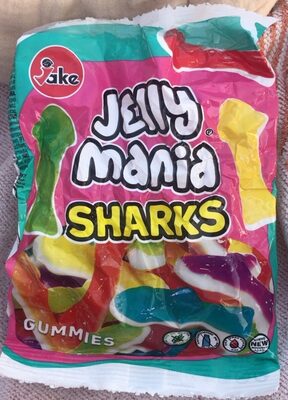
Barcode
8412147029066
Category
Imbiss, Süßer Snack, Süßwaren, Bonbons
Manufactured In
-
Ingredients
glukosesirup
wasser
zucker
modifizierte stärke
gelatine
säuerungsmittel
citronensäure
pflanzenöl
palm
kokosöl
uberzugsmittel
carnaubawachs
aromen
säureregulator
natriumcitrat
farbstoffe
e100
e120
e133
e171
Status: HALAL
Reason: Glucose syrup is typically made from starch and does not contain any haram ingredients.
Uses: Used as a sweetener, thickener, and to enhance texture in various food products.
Status: HALAL
Reason: Water is a natural substance that is free from impurities and holds no religious prohibition.
Uses: Used for drinking, cooking, and various other applications.
Status: HALAL
Reason: Zucker is a natural sweetener derived from plants, and is permissible in Halal dietary laws.
Uses: Commonly used as a sweetener in various food products and beverages.
Status: MASHBOOH
Reason: Die genaue Herkunft und Herstellungsverfahren sind unklar, was zur Unsicherheit führt.
Uses: Wird häufig als Verdickungsmittel oder Stabilisator in Lebensmitteln verwendet.
Status: MASHBOOH
Reason: Gelatine can be derived from both halal and haram sources (animal or fish), and if sourced from haram animals, it is considered haram.
Uses: Widely used as a gelling agent in food products, desserts, and capsules.
Status: UNKNOWN
Status: UNKNOWN
Status: UNKNOWN
Status: HALAL
Reason: Palm is a plant-derived ingredient and is generally considered halal.
Uses: Palm oil is widely used in cooking, baking, and food manufacturing.
Status: HALAL
Reason: Kokosöl (coconut oil) is derived from coconuts, which are considered halal.
Uses: Coconut oil is commonly used for cooking, baking, and as a moisturizing agent in cosmetics.
Status: UNKNOWN
Status: UNKNOWN
Status: MASHBOOH
Reason: Aromen can refer to flavoring agents which may be derived from both halal and haram sources.
Uses: Commonly used in food and beverages to enhance flavor.
Status: UNKNOWN
Status: UNKNOWN
Status: UNKNOWN
Reason: General term for colorings; specific E-codes and sources are needed for classification.
Status: MASHBOOH
Reason: E100 is a food color (Curcumin) and while it is generally considered halal, its source should be verified to ensure compliance.
Uses: E100 is used as a natural yellow food coloring in various food products.
Status: HARAM
Reason: E120, also known as cochineal or carmine, is derived from insects and is considered haram in Islam due to its animal origin and the method of extraction.
Status: MASHBOOH
Reason: E133 (Brilliant Blue FCF) is a synthetic dye and its halal status can vary based on the source and production processes. Further information is needed to determine its permissibility.
Status: MASHBOOH
Reason: E171 is a food additive (Titanium Dioxide) whose halal status may vary based on the source of the raw materials used in its production. It is not clearly identified as halal or haram.
Nutrition Facts
Energy per 100 g / 100 ml
327 kcal
Energy per 100 g / 100 ml
1389 kJ
Fat per 100 g / 100 ml
0.5 g
Saturated fat per 100 g / 100 ml
0.2 g
Carbohydrates per 100 g / 100 ml
76 g
Sugars per 100 g / 100 ml
55 g
Protein per 100 g / 100 ml
4.3 g
Salt per 100 g / 100 ml
0.14 g
Sodium per 100 g / 100 ml
0.056 g