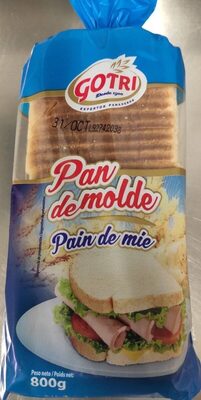
Checking a product without certification? How to review food without a halal label.
Barcode
8420622809911
Category
Aliments et boissons à base de végétaux,Aliments d'origine végétale,Céréales et pommes de terre,Pains,Pains de mie
Manufactured In
-
Ingredients
harina de trigo
agua
levadura
aceite de girasol
azúcar
sal
harina de haba
emulgentes
e471
e481
e472e
estabilizante
e412
conservadores
e282
e200
Status: HALAL
Reason: Wheat flour is plant-derived and halal.
Status: HALAL
Reason: Water is universally halal.
Uses: dilution, cooking
Status: HALAL
Reason: Yeast is a natural ingredient used in baking.
Uses: baking, fermentation
Status: HALAL
Reason: Sunflower oil is derived from plants and is halal.
Uses: cooking, frying, salad dressings
Status: HALAL
Reason: Commonly derived from sugarcane or sugar beet, which are halal sources.
Uses: sweetener
Status: MASHBOOH
Reason: The input 'sal' is not a valid ingredient as it is a common term for salt in several languages but does not represent a specific ingredient. It lacks context.
Uses: Used primarily as a seasoning and preservative in cooking.
Status: UNKNOWN
Status: UNKNOWN
Status: MASHBOOH
Reason: E471, also known as mono- and diglycerides, can be derived from both plant and animal sources, making its status uncertain without specific source information.
Uses: Used as an emulsifier in food products.
Status: MASHBOOH
Reason: E481 refers to mono- and diglycerides of fatty acids, which can be derived from both animal and vegetable sources, making its halal status uncertain without further information.
Status: HALAL
Reason: Derived from vegetable sources and generally considered halal.
Uses: Emulsifier, stabilizer, thickener
Status: UNKNOWN
Status: MASHBOOH
Reason: E412, also known as guar gum, is derived from guar beans and is generally considered halal, but specific processing methods or additives may render it uncertain.
Status: UNKNOWN
Status: MASHBOOH
Reason: E282, also known as sodium propanoate, is a food preservative that may be derived from synthetic or animal sources, leading to uncertainty about its halal status.
Status: MASHBOOH
Reason: E200 is a food additive (sorbic acid) which is generally considered safe, but its halal status can depend on the source and context of its production.
Nutrition Facts
Energy per 100 g / 100 ml
265 kcal
Energy per 100 g / 100 ml
1110 kJ
Fat per 100 g / 100 ml
3.1 g
Saturated fat per 100 g / 100 ml
0.6 g
Carbohydrates per 100 g / 100 ml
49 g
Sugars per 100 g / 100 ml
3.2 g
Fibre per 100 g / 100 ml
2.1 g
Protein per 100 g / 100 ml
9.1 g
Salt per 100 g / 100 ml
1.3 g
Sodium per 100 g / 100 ml
0.52 g