MASHBOOH
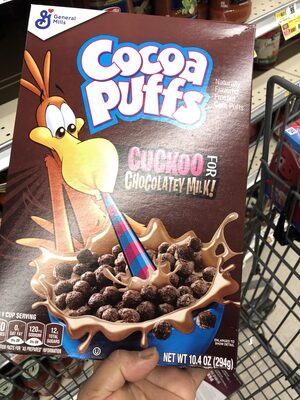
Cocoa puffs chocolatey milk frosted corn puffs
General Mills
Barcode
016000151284
Category
Plant-based foods and beverages, Plant-based foods, Breakfasts, Cereals and potatoes, Cereals and their products, Breakfast cereals, Chocolate cereals, Extruded cereals
Manufactured In
-
Ingredients
whole grain corn
sugar
corn meal
corn syrup
cocoa processed with alkali
canola oil
caramel color
fructose
salt
refiner s syrup
baking soda
natural flavor
6
vitamins and minerals tricalcium phosphate
calcium carbonate
vitamin c sodium ascorbate
iron and zinc mineral nutrients
a b vitamin niacinamide
vitamin b6 pyridoxine hydrochloride
vitamin b
thiamin mononitrate
vitamin a palmitate
vitamin b2 riboflavin
from vitamin folic acid
vitamin b12
vitamin d3
may contain wheat ingredients
Status: HALAL
Reason: Corn is a plant-based food that is widely accepted as halal.
Uses: Corn is commonly used in food products, snacks, and as a vegetable or grain in various cuisines.
Status: HALAL
Uses: Sweetener, food preservative
Status: HALAL
Reason: Corn is a plant-based food that is widely accepted as halal.
Uses: Corn is commonly used in food products, snacks, and as a vegetable or grain in various cuisines.
Status: HALAL
Reason: Corn is a plant-based food that is widely accepted as halal.
Uses: Corn is commonly used in food products, snacks, and as a vegetable or grain in various cuisines.
Status: HALAL
Reason: Cocoa is derived from cocoa beans, a plant-based ingredient and is permissible in Islam.
Uses: Used in chocolate, desserts, beverages, and various confections.
Status: HALAL
Reason: Derived from plants and widely accepted as halal.
Uses: cooking oil, salad dressing
Status: MASHBOOH
Reason: The source of caramel color can vary and may involve non-halal ingredients or processing methods. As such, its halal status cannot be guaranteed.
Uses: Commonly used as a food coloring in various products like beverages, sauces, and baked goods.
Status: MASHBOOH
Reason: The ingredient name is not valid or specific enough to determine its status.
Uses: Unknown
Status: HALAL
Reason: Commonly used seasoning in food.
Uses: Flavoring, preservative
Status: MASHBOOH
Reason: The input is not a valid ingredient name.
Uses: Unknown
Status: MASHBOOH
Reason: The input is not a valid ingredient name.
Uses: Unknown
Status: MASHBOOH
Reason: The input does not represent a valid ingredient.
Uses: Unknown
Status: MASHBOOH
Reason: The input is not a valid ingredient name.
Uses: Unknown
Status: HALAL
Reason: Calcium is a mineral that can be derived from various sources, including non-animal sources.
Uses: Commonly used as a dietary supplement and in food fortification.
Status: HALAL
Reason: Calcium is a mineral that can be derived from various sources, including non-animal sources.
Uses: Commonly used as a dietary supplement and in food fortification.
Status: UNKNOWN
Reason: General term, could refer to various compounds.
Status: HALAL
Reason: Iron is a mineral and is halal for consumption.
Uses: Iron is commonly used as a dietary supplement and in the fortification of food products.
Status: HALAL
Reason: Niacin is a vitamin (B3) that is naturally found in meats, fish, and grains. It is considered halal as it is derived from non-haram sources.
Uses: Niacin is commonly used as a dietary supplement and food additive to improve nutritional value and support metabolic functions.
Status: MASHBOOH
Reason: The source of vitamin B6 can vary; it may be synthetic or derived from non-halal sources.
Uses: Vitamin B6 is commonly used as a dietary supplement and in food fortification.
Status: MASHBOOH
Reason: The input is not a valid ingredient.
Uses: Unknown
Status: MASHBOOH
Reason: The input is not a valid ingredient.
Uses: Unknown
Status: HALAL
Reason: Palm is a plant-derived ingredient and is generally considered halal.
Uses: Palm oil is widely used in cooking, baking, and food manufacturing.
Status: HALAL
Reason: Vitamin B2 (Riboflavin) is synthetic and does not derive from animal sources.
Uses: Used as a dietary supplement and food additive.
Status: HALAL
Reason: Folic acid is a synthetic form of vitamin B9, commonly used in dietary supplements and fortified foods, and does not have any non-halal sources.
Uses: Used to prevent folate deficiency, in prenatal vitamins, and to support overall health.
Status: MASHBOOH
Reason: Insufficient information to determine if B12 is derived from a halal source.
Uses: Vitamin B12 is used as a supplement and is essential for nerve function, the production of DNA and red blood cells.
Status: MASHBOOH
Reason: Vitamin D can be derived from both animal and plant sources; if derived from animal sources, it may not be halal.
Uses: Fortification of foods, dietary supplements.
Status: HALAL
Reason: Wheat is a staple grain that is permissible in Islam as it does not contain any Haram components.
Uses: Used in various food products such as bread, pasta, and cereals.
Nutrition Facts
carbohydrates
31
carbohydrates_100g
86.1
carbohydrates_serving
31
carbohydrates_unit
g
carbohydrates_value
31
energy
586