MASHBOOH
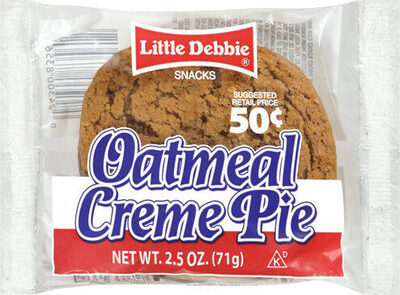
Oatmeal Creme Pie
Little Debbie
Barcode
024300835612
Category
undefined
Manufactured In
Unknown
Ingredients
corn syrup
enriched bleached flour (wheat flour, barley malt, niacin, reduced iron, thiamin mononitrate [vitamin b1], riboflavin [vitamin b2], folic acid)
palm and soybean oils with tbhq and citric acid to protect flavor
dextrose
whole gran oats
water
sugar
molasses
raisins. contains 2% or less of each of the following: soy flour
leavening (baking soda, ammonium bicarbonate, sodium aluminum phosphate)
whey
salt
soy lecithin
corn starch
mono - and diglycerides
sorbitan monostearate
polysorbate 60
eggs
palm and palm kernel oil
egg whites
cocoa processed with alkali
high fructose corn syrup
rice flour
nonfat dry milk
modified corn starch
datem
modified tapioca starch
carrageenan
sorbic acid (to preserve freshness)
spices
natural and artificial flavors
artificial colors (includes red 40, yellow 5, blue 1)
citric acid
malic acid
sodium stearoyl lactylate
propylene glycol monostearate
polysorbate 80
pectin
sodium citrate
modified wheat starch
chocolate
cocoa butter.
Status: HALAL
Reason: Derived from corn, which is considered halal.
Uses: Sweetener, thickener
Status: UNKNOWN
Status: UNKNOWN
Status: HALAL
Reason: Carbohydrate derived from corn or other plants.
Uses: sweetener in candy, beverages
Status: UNKNOWN
Status: HALAL
Reason: Essential component for food and drink.
Status: HALAL
Reason: Plant-derived, commonly used sweetener.
Uses: sweetener in various foods
Status: HALAL
Reason: Molasses is derived from sugar cane or sugar beets and does not contain any haram ingredients.
Uses: Molasses is used as a sweetener in various dishes, baking, and food processing.
Status: UNKNOWN
Status: UNKNOWN
Status: MASHBOOH
Reason: Whey is derived from milk, but its halal status can depend on the source of the rennet used in cheese production and other additives that may not be halal.
Uses: Whey is commonly used as a protein supplement, in food products like cheese, yogurts, and protein powders.
Status: HALAL
Reason: Mineral, inherently Halal.
Uses: seasoning, preservation
Status: HALAL
Reason: Emulsifier derived from soybeans.
Uses: emulsifier in food products
Status: HALAL
Reason: Derived from corn, used as a thickener.
Uses: thickener, stabilizer
Status: UNKNOWN
Status: UNKNOWN
Status: UNKNOWN
Status: HALAL
Reason: Eggs are a natural animal product that is generally considered Halal as long as it comes from Halal animals.
Uses: Used in a variety of dishes, including baking, cooking, and as a protein source.
Status: UNKNOWN
Status: HALAL
Reason: Egg whites are derived from halal sources (chickens) and do not contain any haram substances.
Uses: Commonly used in baking, cooking, and as a source of protein.
Status: HALAL
Reason: Cocoa processed with alkali does not contain any haram ingredients.
Uses: Used in chocolate production and baking.
Status: HALAL
Reason: High fructose corn syrup is derived from corn and does not contain any haram substances.
Uses: Commonly used as a sweetener in beverages, snacks, and processed foods.
Status: HALAL
Reason: Gluten-free flour, derived from rice.
Uses: baking, thickening
Status: UNKNOWN
Status: HALAL
Reason: Modified corn starch is derived from corn, which is a permissible source and does not contain any haram components.
Uses: Commonly used as a thickener, stabilizer, or emulsifier in food products.
Status: UNKNOWN
Status: HALAL
Reason: Vegetable-derived, used safely in food.
Uses: thickener, stabilizer
Status: HALAL
Reason: Carrageenan is derived from red algae and does not contain any animal products or sources that are considered haram.
Uses: Used as a thickener, stabilizer, and emulsifier in various food products, including dairy and non-dairy alternatives.
Status: UNKNOWN
Status: HALAL
Reason: Plant-derived ingredients, commonly used in food.
Uses: flavoring, seasoning
Status: MASHBOOH
Reason: The specific sources of the natural and artificial flavors are often not disclosed, making it difficult to determine if they are halal or haram.
Uses: Commonly used in food and beverage products to enhance taste and aroma.
Status: UNKNOWN
Status: HALAL
Reason: Organic acid derived from citrus fruits, plant source.
Uses: preservative, acidity regulator
Status: HALAL
Reason: Malic acid is a naturally occurring organic acid and is commonly found in fruits. It is generally considered halal as it does not derive from any haram sources.
Uses: Used as a food additive, flavoring agent, and in the production of sour candies and beverages.
Status: UNKNOWN
Status: UNKNOWN
Status: UNKNOWN
Status: HALAL
Reason: Pectin is a natural substance derived from fruits and is commonly used as a gelling agent in food preparation.
Uses: It is primarily used in jams, jellies, and other food products to help them set and thicken.
Status: HALAL
Reason: Sodium citrate is derived from citric acid and is considered halal.
Uses: Food additive, anticoagulant, emulsifier
Status: UNKNOWN
Status: MASHBOOH
Reason: Some chocolates may contain haram ingredients such as gelatin or alcohol.
Uses: Used as a sweet treat, in baking, and for flavoring.
Status: UNKNOWN
Nutrition Facts
calcium
0
calcium_100g
0
calcium_serving
0
calcium_unit
mg
calcium_value
0
carbohydrates
70.42


