MASHBOOH
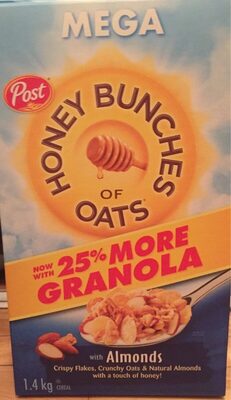
Honey Bunches of Oats
Post
Barcode
0628154252832
Category
Plant-based foods and beverages, Plant-based foods, Breakfasts, Cereals and potatoes, Cereals and their products, Breakfast cereals, Flakes, Cereal flakes, Cereals with almonds
Manufactured In
-
Ingredients
corn
sugars (sugar, glucose syrup, cooking molasses, honey, barley malt extract)
whole grain wheat
whole grain rolled oats
rice
almonds
vegetable oil
wheat flour
malted barley flour
salt
caramel colour
cinnamon
natural and artificial flavour
annatto extract (colour)
bht added to preserve freshness
vitamins and minerals [reduced iron
niacinamide (vitamin b3)
zinc oxide
thiamine mononitrate (vitamin b1)
pyridoxine hydrochloride (vitamin b6)
folic acid]. contains: oats
wheat
barley
almonds.
Status: HALAL
Reason: Corn is a plant-based food that is widely accepted as halal.
Uses: Corn is commonly used in food products, snacks, and as a vegetable or grain in various cuisines.
Status: HALAL
Reason: Sugars are natural carbohydrates that are typically derived from plants.
Uses: Used as a sweetener in various food and beverage products.
Status: HALAL
Reason: Whole grain wheat is a natural grain and does not contain any ingredients derived from haram sources.
Uses: Used in various food products such as bread, pasta, cereals, and as a source of whole grain nutrition.
Status: HALAL
Reason: Whole grain rolled oats are derived from oats, which are plants and permissible in Islam.
Uses: Commonly used for breakfast cereals, baking, and as a healthy ingredient in various dishes.
Status: HALAL
Reason: Rice is a natural plant-based food and is permissible in Islam.
Uses: Rice is commonly used as a staple food in many cuisines around the world.
Status: HALAL
Reason: Almonds are natural nuts that are not derived from any haram sources and do not contain any haram additives.
Uses: Almonds can be consumed raw, roasted, or used in various dishes, desserts, and snacks.
Status: HALAL
Reason: Typically derived from plants and does not contain any animal products.
Uses: Used in cooking, frying, baking, and food preparation.
Status: HALAL
Reason: Wheat flour is derived from wheat, which is a plant-based ingredient and permissible in Islam.
Uses: Wheat flour is commonly used for baking bread, pastries, and other baked goods.
Status: HALAL
Reason: Barley is a natural grain and does not contain any haram components.
Uses: Used in baking, cooking, and as a thickening agent.
Status: HALAL
Reason: Salt is a mineral primarily composed of sodium chloride and does not contain any haram components.
Uses: Used as a seasoning and preservative in food.
Status: MASHBOOH
Reason: The input is not a valid ingredient.
Uses: Unknown
Status: HALAL
Reason: Cinnamon is a spice derived from the bark of trees belonging to the Cinnamomum family and is permissible in Islam.
Uses: Cinnamon is commonly used in cooking, baking, and as a flavoring agent in various dishes and beverages.
Status: MASHBOOH
Reason: The source of artificial flavours can vary, and without specific information on the source, it's unclear if they are derived from halal or haram sources.
Uses: Commonly used in food and beverage products to enhance taste and aroma.
Status: MASHBOOH
Reason: The ingredient name is not valid or specific enough to determine its status.
Uses: Unknown
Status: MASHBOOH
Reason: The input does not represent a valid ingredient.
Uses: Unknown
Status: HALAL
Reason: Iron is a mineral and is halal for consumption.
Uses: Iron is commonly used as a dietary supplement and in the fortification of food products.
Status: HALAL
Reason: Niacin is a vitamin (B3) that is naturally found in meats, fish, and grains. It is considered halal as it is derived from non-haram sources.
Uses: Niacin is commonly used as a dietary supplement and food additive to improve nutritional value and support metabolic functions.
Status: MASHBOOH
Reason: Zinc is a mineral that can be found in various supplements and food sources. The purity of the source needs to be confirmed to ensure it is Halal, as some supplements may contain non-Halal additives.
Uses: Zinc is commonly used in dietary supplements for immune support, wound healing, and overall health.
Status: HALAL
Reason: Vitamin B1, also known as thiamine, is typically derived from sources that are halal, such as grains and legumes.
Uses: Vitamin B1 is used as a dietary supplement and is crucial for energy metabolism in the body.
Status: MASHBOOH
Reason: The source of vitamin B6 can vary; it may be synthetic or derived from non-halal sources.
Uses: Vitamin B6 is commonly used as a dietary supplement and in food fortification.
Status: HALAL
Reason: Folic acid is a synthetic form of vitamin B9, commonly used in dietary supplements and fortified foods, and does not have any non-halal sources.
Uses: Used to prevent folate deficiency, in prenatal vitamins, and to support overall health.
Status: HALAL
Reason: Wheat is a plant-based ingredient and does not contain any haram components.
Uses: Wheat is commonly used in baking, cooking, and as a base for many food products such as bread, pasta, and noodles.
Status: HALAL
Reason: Barley is a grain that is permissible in Islam and does not contain any haram substances.
Uses: Barley is commonly used in cooking, brewing, and making flour or porridge.
Status: HALAL
Reason: Almonds are natural nuts that are not derived from any haram sources and do not contain any haram additives.
Uses: Almonds can be consumed raw, roasted, or used in various dishes, desserts, and snacks.
Nutrition Facts
Energy per 100 g / 100 ml
220 kcal
Energy per 100 g / 100 ml
920 kJ
Fat per 100 g / 100 ml
4 g
Saturated fat per 100 g / 100 ml
0.5 g
Carbohydrates per 100 g / 100 ml
42 g
Sugars per 100 g / 100 ml
10 g
Fibre per 100 g / 100 ml
3 g
Protein per 100 g / 100 ml
4 g
Salt per 100 g / 100 ml
< 0.51 g
Sodium per 100 g / 100 ml
< 0.204 g