MASHBOOH
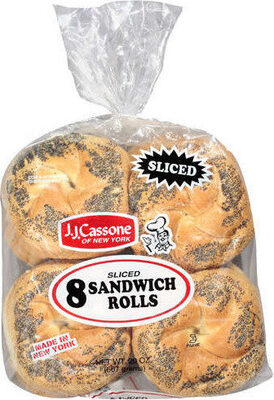
8 Sliced Sandwich Rolls
J.J. Cassone Bakery Inc.
Barcode
072201103484
Category
Plant-based foods and beverages, Plant-based foods, Cereals and potatoes, Breads
Manufactured In
Unknown
Ingredients
unbleached enriched wheat flour [flour
malted barley flour
niacin
reduced iron
thiamine mononitrate (vitamin b1)
riboflavin (vitamin b2)
folic acid (a "b" vitamin)] water
sugar. contains 2% or less of each of the following: salt
soybean oil
yeast
vital wheat gluten
malt
dough conditioners (datem, guar gum, ascorbic acid, enzyme, l-cysteine, azodicarbonamide, polysorbate 60, sodium stearoyl lactylate, mono and diglycerides, calcium sulfate)
dextrose
corn flour
calcium propionate (a preservative). poppy seeds (if present).
Status: UNKNOWN
Status: HALAL
Reason: Derived from grains, widely used in food.
Uses: baking, brewing, flavoring
Status: HALAL
Reason: Niacin is a vitamin (B3) that is naturally found in meats, fish, and grains. It is considered halal as it is derived from non-haram sources.
Uses: Niacin is commonly used as a dietary supplement and food additive to improve nutritional value and support metabolic functions.
Status: HALAL
Reason: Reduced iron is a form of iron that is often used as a dietary supplement and is typically derived from iron ore, which is halal.
Uses: Used as a nutrient supplement in food products and in dietary formulations.
Status: UNKNOWN
Status: HALAL
Reason: Riboflavin is a water-soluble vitamin that is not derived from haram sources.
Uses: Commonly used as a dietary supplement and food additive.
Status: UNKNOWN
Status: UNKNOWN
Status: HALAL
Reason: Soybean oil is derived from soybeans and does not contain any haram substances.
Uses: Soybean oil is commonly used in cooking, baking, and as a salad dressing.
Status: HALAL
Reason: Yeast is a type of fungus used in baking and fermentation, and is generally considered halal.
Uses: Used in baking bread, brewing beer, and in fermentation processes.
Status: UNKNOWN
Status: MASHBOOH
Reason: Malt can be derived from barley, which is halal, but the process of processing and any additives used may render it unclear in terms of halal status.
Uses: Malt is often used in the production of beverages, baked goods, and flavoring agents.
Status: UNKNOWN
Status: HALAL
Reason: Carbohydrate derived from corn or other plants.
Uses: sweetener in candy, beverages
Status: HALAL
Reason: Corn flour is derived from corn, which is a plant-based ingredient and does not contain any haram components.
Uses: Corn flour is commonly used in baking, cooking, and as a thickening agent in various dishes.
Status: UNKNOWN
Nutrition Facts
Energy per 100 g / 100 ml
268 kcal
Energy per 100 g / 100 ml
1121 kJ
Fat per 100 g / 100 ml
2.11 g
Saturated fat per 100 g / 100 ml
0 g
Carbohydrates per 100 g / 100 ml
53.52 g
Sugars per 100 g / 100 ml
2.82 g
Fibre per 100 g / 100 ml
2.8 g
Protein per 100 g / 100 ml
9.86 g
Salt per 100 g / 100 ml
1.4075 g
Sodium per 100 g / 100 ml
0.563 g