MASHBOOH
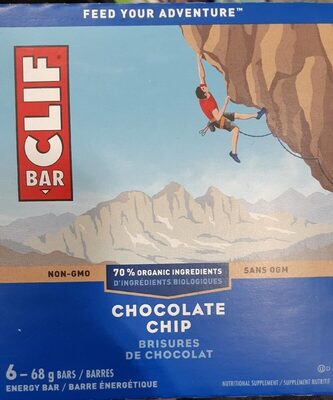
Chocolate Chip Energy Bar Nutritional Supplement
Clif Bar
Barcode
0722252126030
Category
Snacks,Sweet snacks,Chocolate cereal bars
Manufactured In
-
Ingredients
brown rice syrup*
rolled oats*
soy protein isolate
cane syrup*
roasted soybeans*
rice flour
cane sugar*
oat fibre*
unsweetened chocolate
soy flour*
high-oleic sunflower oil*
cocoa butter*
milled flaxseed*
barley malt extract
natural flavours
sea salt
rice starch
soy lecithin
cinnamon*. vitamins & minerals: dicalcium phosphate
potassium citrate
magnesium oxide
ascorbic asid
dl-alpha tocopheryl acetate
calcium carbonate
zinc citrate
manganese gluconate
niacinamide
biotin
copper gluconate
iron
beta-carotene
vitamin a palmitate
d-calcium pantothenate
sodium selenite
folic acid
pyridoxine hydrochloride
riboflavin
thiamine mononitrate
ergocalciferol
chromium chloride
sodium molybdate
potassium iodide
cyanocobalamin. contains barley
oats
and soy. may contain peanuts
tree nuts
milk
rye
triticale
and wheat.
*organic
*rainforest alliance certified
Status: HALAL
Reason: Rice is a natural plant-based food and is permissible in Islam.
Uses: Rice is commonly used as a staple food in many cuisines around the world.
Status: MASHBOOH
Reason: The ingredient name is not valid or specific enough to determine its status.
Uses: Unknown
Status: MASHBOOH
Reason: The ingredient name is not valid or specific enough to determine its status.
Uses: Unknown
Status: MASHBOOH
Reason: The input is not a valid ingredient name.
Uses: Unknown
Status: HALAL
Reason: Soybeans are plant-based and do not contain any haram substances.
Uses: Used in various food products such as tofu, soy milk, and as a meat substitute.
Status: HALAL
Reason: Rice flour is made from ground rice, a plant-based ingredient, which is permissible in Islam.
Uses: Rice flour is commonly used in various cuisines for baking, thickening sauces, and as a gluten-free alternative in recipes.
Status: HALAL
Reason: Sugar is derived from sugarcane or sugar beets and does not contain any haram ingredients.
Uses: Sugar is used as a sweetener in a variety of food and beverage products.
Status: HALAL
Reason: Oat fibre is derived from oats, which are a plant-based source. It does not contain any haram ingredients.
Uses: Oat fibre is commonly used as a dietary fiber supplement, in baking, and as a thickening agent in various food products.
Status: MASHBOOH
Reason: The input is not a valid ingredient.
Uses: N/A
Status: HALAL
Reason: Soy is a plant-based ingredient and does not contain any haram components.
Uses: Commonly used in various food products, including tofu, soy sauce, and as a meat substitute.
Status: HALAL
Reason: Derived from sunflower seeds, which are plant-based and permissible in halal dietary laws.
Uses: Commonly used in cooking, frying, and as an ingredient in various food products.
Status: HALAL
Reason: Cocoa butter is derived from cocoa beans and does not contain any animal products or haram substances.
Uses: Cocoa butter is commonly used in food products, cosmetics, and pharmaceuticals.
Status: MASHBOOH
Reason: The input is not a valid ingredient.
Uses: Unknown
Status: HALAL
Reason: Barley malt extract is derived from barley, which is a permissible grain in Islam and does not contain any haram substances.
Uses: Used as a flavoring agent, sweetener, and for its malting properties in various food products.
Status: MASHBOOH
Reason: The term 'natural flavours' can encompass a variety of substances, some of which may not be halal or could be derived from haram sources.
Uses: Used to enhance the flavor of food and beverages.
Status: HALAL
Reason: Sea salt is a natural mineral and does not contain any haram substances.
Uses: Used as a seasoning or preservative in various foods.
Status: HALAL
Reason: Rice is a natural plant-based food and is permissible in Islam.
Uses: Rice is commonly used as a staple food in many cuisines around the world.
Status: MASHBOOH
Reason: The input is not a valid ingredient.
Uses: N/A
Status: HALAL
Reason: Cinnamon is a spice derived from the bark of trees belonging to the Cinnamomum family and is permissible in Islam.
Uses: Cinnamon is commonly used in cooking, baking, and as a flavoring agent in various dishes and beverages.
Status: HALAL
Reason: Potassium is a mineral that is essential for human health and is not derived from any haram sources.
Uses: Used as a dietary supplement and in various food products.
Status: MASHBOOH
Reason: The input is not a valid ingredient.
Uses: Unknown
Status: MASHBOOH
Reason: The input is not a valid ingredient.
Uses: Unknown
Status: MASHBOOH
Reason: The input is not a valid ingredient.
Uses: N/A
Status: HALAL
Reason: Calcium is a mineral that can be derived from various sources, including non-animal sources.
Uses: Commonly used as a dietary supplement and in food fortification.
Status: MASHBOOH
Reason: Zinc is a mineral that can be found in various supplements and food sources. The purity of the source needs to be confirmed to ensure it is Halal, as some supplements may contain non-Halal additives.
Uses: Zinc is commonly used in dietary supplements for immune support, wound healing, and overall health.
Status: MASHBOOH
Reason: The input is not a valid ingredient.
Uses: Unknown
Status: HALAL
Reason: Niacin is a vitamin (B3) that is naturally found in meats, fish, and grains. It is considered halal as it is derived from non-haram sources.
Uses: Niacin is commonly used as a dietary supplement and food additive to improve nutritional value and support metabolic functions.
Status: MASHBOOH
Reason: Biotin is a vitamin found in various foods, but its source and production process may involve non-halal ingredients or methods.
Uses: Biotin is commonly used as a dietary supplement for promoting hair, skin, and nail health.
Status: MASHBOOH
Reason: The ingredient name is not valid or specific enough to determine its status.
Uses: Unknown
Status: HALAL
Reason: Iron is a mineral and is halal for consumption.
Uses: Iron is commonly used as a dietary supplement and in the fortification of food products.
Status: HALAL
Reason: Carotene is a natural pigment found in plants and is not derived from any haram sources.
Uses: Used as a colorant in food products and as a dietary supplement.
Status: HALAL
Reason: Vitamin A palmitate is a synthetic form of vitamin A and does not contain any animal derivatives or alcohol.
Uses: Used as a dietary supplement and in food fortification.
Status: HALAL
Reason: Calcium is a mineral that can be derived from various sources, including non-animal sources.
Uses: Commonly used as a dietary supplement and in food fortification.
Status: MASHBOOH
Reason: Not a specific ingredient; may refer to salt in different contexts or forms that could include additives.
Uses: Commonly used as a seasoning or preservative.
Status: HALAL
Reason: Folic acid is a synthetic form of vitamin B9, commonly used in dietary supplements and fortified foods, and does not have any non-halal sources.
Uses: Used to prevent folate deficiency, in prenatal vitamins, and to support overall health.
Status: MASHBOOH
Reason: The input is not a valid ingredient.
Uses: N/A
Status: MASHBOOH
Reason: The input does not represent a valid ingredient.
Uses: Unknown
Status: MASHBOOH
Reason: The input is not a valid ingredient.
Uses: Unknown
Status: MASHBOOH
Reason: Not a valid ingredient name.
Uses: Unknown
Status: MASHBOOH
Reason: The input is not a valid ingredient.
Uses: Unknown
Status: HALAL
Reason: Sodium is a mineral and does not derive from animal sources or involve any prohibited substances.
Uses: Commonly used in food preservation, seasoning, and as a dietary supplement.
Status: HALAL
Reason: Potassium is a mineral that is essential for human health and is not derived from any haram sources.
Uses: Used as a dietary supplement and in various food products.
Status: HALAL
Reason: Cyanocobalamin is a synthetic form of vitamin B12 and does not involve any haram substances in its production.
Uses: Used as a dietary supplement to treat vitamin B12 deficiency and in food fortification.
Status: MASHBOOH
Reason: The ingredient name is not valid or specific enough to determine its status.
Uses: Unknown
Status: HALAL
Reason: Peanuts are a plant-based food and have no haram components.
Uses: Used as a snack, in sauces, desserts, and various dishes.
Status: HALAL
Reason: Tree nuts are natural foods and do not contain any Haram substances.
Uses: Used in various culinary dishes, snacks, and as a source of healthy fats and proteins.
Status: HALAL
Reason: Milk is a natural product derived from animals that are permissible in Islam, provided they are halal.
Uses: Milk is used for drinking, in cooking, and as an ingredient in various food products such as cheese and yogurt.
Status: MASHBOOH
Reason: The term 'r' is too vague and does not specify a valid ingredient.
Uses: Unknown
Status: MASHBOOH
Reason: The ingredient name is not valid or specific enough to determine its status.
Uses: Unknown
Status: HALAL
Reason: Wheat is a plant-based ingredient and does not contain any haram components.
Uses: Wheat is commonly used in baking, cooking, and as a base for many food products such as bread, pasta, and noodles.
Nutrition Facts
carbohydrates
64.71
carbohydrates_100g
64.71
carbohydrates_serving
44
carbohydrates_unit
g
carbohydrates_value
64.71
energy
1538