MASHBOOH
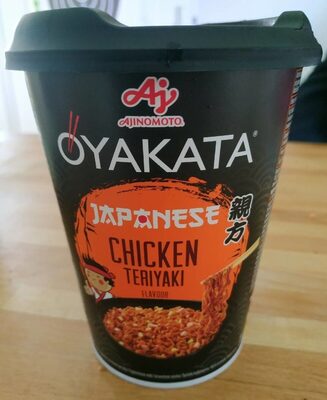
Nouilles saveur Poulet Teriyaki
Daisuki
Barcode
3036815444668
Category
Plant-based foods and beverages, Plant-based foods, Pastas, Noodles, Chinese noodles, Flavoured Asian noodles, Flavoured cooked Asian noodles, en:instant-noodles
Manufactured In
-
Ingredients
nouilles instantanées
farine de blé
avec gluten de blé
huile de palme
amidon modifié
sel
poudres à lever
carbonates de sodium
carbonates de potassium
assaisonnement
amidon
exhausteurs de goût
glutamate monosodique
5'-ribonucleotide disodique
sel
extrait de levure
sucre
arômes
graisse de poulet
carotte
lactose
ail
colorant
caramel ordinaire
épice
poireau
persil
viande de poulet
correcteur d'acidité
acide citrique
sauce soja
graines de soja
blé
maltodextrine
sel
céleri
Status: UNKNOWN
Status: HALAL
Reason: Farine de blé (wheat flour) is derived from wheat, which is considered halal.
Uses: Commonly used in baking, cooking, and food production.
Status: UNKNOWN
Status: HALAL
Reason: Palm oil is generally halal.
Uses: oil, cooking
Status: HALAL
Reason: Modified starch, typically plant-derived.
Uses: thickening, stabilizing agent
Status: HALAL
Reason: Common food ingredient, universally accepted.
Uses: flavoring, preserving
Status: MASHBOOH
Reason: Contains diphosphates and carbonates which may have uncertain halal sources.
Uses: Leavening agent
Status: HALAL
Reason: Commonly used and recognized as halal; derived from mineral sources.
Uses: Leavening agent, acidity regulator
Status: UNKNOWN
Status: HALAL
Reason: Typically consists of halal spices and herbs.
Status: HALAL
Reason: Common food thickening agent; typically halal.
Uses: thickener
Status: UNKNOWN
Status: MASHBOOH
Reason: It is a flavor enhancer derived from natural sources but can also be synthesized from non-halal sources.
Uses: Commonly used in food processing to enhance umami flavor.
Status: HALAL
Reason: Used as a flavor enhancer derived from nucleotides.
Uses: flavor enhancer
Status: HALAL
Reason: Common food ingredient, universally accepted.
Uses: flavoring, preserving
Status: HALAL
Reason: Yeast extract is derived from yeast and does not contain any haram components.
Uses: Commonly used as a flavor enhancer in processed foods and vegetarian products.
Status: HALAL
Reason: General sugar is halal.
Uses: sweetener
Status: MASHBOOH
Reason: The term 'arômes' refers to flavorings which can be derived from both halal and haram sources, making its status uncertain without specific details.
Uses: Used in food and beverage products for flavor enhancement.
Status: UNKNOWN
Status: HALAL
Reason: Vegetable, entirely plant-based ingredient.
Uses: used in salads, soups, juices
Status: HALAL
Reason: Sugar derived from milk, acceptable.
Uses: sweetener
Status: MASHBOOH
Reason: The ingredient 'ail' is not a standard or commonly recognized ingredient. It may refer to garlic in some contexts, which is generally considered halal, but its ambiguous state makes it uncertain.
Uses: Garlic is commonly used as a flavoring agent in various cuisines.
Status: MASHBOOH
Reason: Depends on specific colorant type used.
Status: UNKNOWN
Status: MASHBOOH
Reason: The term 'épice' refers to spices in general, which can vary and may include both halal and haram ingredients depending on the specific spice and its processing.
Uses: Commonly used as flavoring in various cuisines.
Status: HALAL
Reason: Vegetable; inherently halal.
Status: HALAL
Reason: Parsley is Halal.
Status: HALAL
Reason: Chicken meat is permissible in Islam.
Status: HALAL
Reason: Commonly used in food for acidity regulation.
Status: HALAL
Reason: Common food acid, plant-derived.
Uses: preservative, flavoring
Status: HALAL
Reason: Soy sauce is usually made from fermented soybeans.
Uses: flavoring, seasoning
Status: UNKNOWN
Status: HALAL
Reason: Blé is wheat in French, which is a plant-based food and permissible in Islam.
Uses: Used in various food products such as bread, pasta, and cereals.
Status: HALAL
Reason: Maltodextrin is derived from starch through hydrolysis and does not contain any haram ingredients.
Uses: Commonly used as a food additive, thickener, or preservative in various food products.
Status: HALAL
Reason: Common food ingredient, universally accepted.
Uses: flavoring, preserving
Status: HALAL
Reason: Céleri, or celery, is a vegetable and does not contain any haram ingredients.
Uses: Commonly used in salads, soups, and as a garnish.
Nutrition Facts
carbohydrates
12
carbohydrates_100g
12
carbohydrates_unit
g
carbohydrates_value
12
energy
384
energy-kcal
92