Checking a product without certification? How to review food without a halal label.
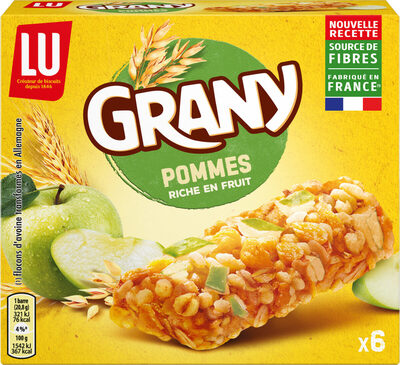
Barcode
3392460510050
Category
Snacks, Snacks sucrés, Barres
Manufactured In
France
Ingredients
céréales 42
4 % (maïs 15 %, flocons d'avoine 14 %, farine de riz 5,2 %, flocons de seigle malté 4,8 %, farine de blé 3,1 %, farine de blé malté 0,3 %)
sirop de glucose
stabilisant (sorbitols)
morceaux de pommes vertes séchées 12 % (équivalent pommes vertes 73 %)
huiles végétales (colza, palme)
gluten de blé
dextrose
sucre
sel
arôme
émulsifiant (lécithines de tournesol)
extrait de malt d'orge
correcteur d'acidité (acide citrique)
conservateur (disulfite de sodium).
Status: MASHBOOH
Reason: Not a valid ingredient name, it appears to be a number.
Uses: Unknown
Status: HALAL
Reason: Rice flour is made from ground rice, which is a plant-based ingredient and permissible in Islam.
Uses: Used in various culinary applications such as baking, thickening, and as a gluten-free alternative.
Status: HALAL
Reason: Glucose is a simple sugar derived from plants and does not contain any prohibited substances.
Uses: Commonly used as a sweetener in food and beverages.
Status: MASHBOOH
Reason: The ingredient name is not valid or specific enough to determine its status.
Uses: Unknown
Status: MASHBOOH
Reason: The term 'eau' is vague and generally means 'water' in French, but without further specification, it cannot be classified as Halal or Haram.
Uses: Eau may refer to a wide range of products based on water, including beverages, perfumes, and cosmetics.
Status: HALAL
Reason: Palm is a plant-derived ingredient and is generally considered halal.
Uses: Palm oil is widely used in cooking, baking, and food manufacturing.
Status: HALAL
Reason: Gluten de blé is derived from wheat and does not contain any haram components.
Uses: Often used in baking, cooking, and as a protein source in various food products.
Status: MASHBOOH
Reason: The ingredient name is not valid or specific enough to determine its status.
Uses: Unknown
Status: HALAL
Reason: Sugar (sucre) is derived from sugarcane or sugar beet and does not contain any haram components.
Uses: Used as a sweetener in various foods and beverages.
Status: MASHBOOH
Reason: Not a specific ingredient; may refer to salt in different contexts or forms that could include additives.
Uses: Commonly used as a seasoning or preservative.
Status: MASHBOOH
Reason: The input is not a valid ingredient.
Uses: Unknown
Status: MASHBOOH
Reason: The input is not a valid ingredient.
Uses: Unknown
Status: MASHBOOH
Reason: The input is not a valid ingredient.
Uses: Unknown
Status: MASHBOOH
Reason: The ingredient name is not valid or specific enough to determine its status.
Uses: Unknown
Status: MASHBOOH
Reason: Chemical additives like sodium bisulfite can be derived from sources that may or may not be halal, and their exact derivation is often unclear.
Uses: Commonly used as a preservative in food products to prevent spoilage and maintain color.
Nutrition Facts
Energy per 100 g / 100 ml
410 kcal
Energy per 100 g / 100 ml
1715 kJ
Fat per 100 g / 100 ml
13 g
Saturated fat per 100 g / 100 ml
3.8 g
Carbohydrates per 100 g / 100 ml
70 g
Sugars per 100 g / 100 ml
24 g
Fibre per 100 g / 100 ml
3 g
Protein per 100 g / 100 ml
4.7 g
Salt per 100 g / 100 ml
0.62 g
Sodium per 100 g / 100 ml
0.248 g