Checking a product without certification? How to review food without a halal label.
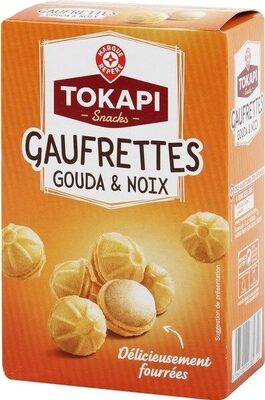
Barcode
3564700026380
Category
snacks, snacks-sales, amuse-gueules, biscuits-aperitifs, biscuits-aperitifs-fourres-au-fromage
Manufactured In
-
Ingredients
huile de coco totalement hydrogénée et non hydrogénée
farine de blé
lactosérum en poudre
noix
fromages fondus
dont gouda
amidon de blé
arôme
sel
antioxydant
extrait riche en tocophérols
huile de tournesol
émulsifiant
lécithines
lécithines de soja
poudre à lever
e500
colorant
rocou
Status: UNKNOWN
Status: HALAL
Reason: Farine de blé (wheat flour) is derived from wheat, which is considered halal.
Uses: Commonly used in baking, cooking, and food production.
Status: UNKNOWN
Status: HALAL
Reason: The ingredient consists of various nuts, which are generally considered Halal.
Uses: Commonly used in snacks, desserts, and culinary dishes.
Status: UNKNOWN
Status: UNKNOWN
Status: HALAL
Reason: Wheat starch is a common, halal food ingredient.
Status: MASHBOOH
Reason: Generic term; origin uncertain.
Uses: flavoring agent
Status: HALAL
Reason: Common food ingredient, universally accepted.
Uses: flavoring, preserving
Status: MASHBOOH
Reason: Generic term; needs specification for exact identity.
Uses: preventing oxidation in food
Status: UNKNOWN
Status: HALAL
Reason: Sunflower oil, plant-derived.
Uses: cooking, salad dressings
Status: HALAL
Reason: Common emulsifiers can be halal, depending on source.
Status: UNKNOWN
Status: UNKNOWN
Status: UNKNOWN
Status: HALAL
Reason: Sodium carbonates and bicarbonates, used as leavening agents.
Uses: leavening in baked goods
Status: MASHBOOH
Reason: Depends on specific colorant type used.
Status: HALAL
Reason: Rocou is derived from the seeds of the annatto plant, which is used as a natural coloring agent and is generally considered acceptable in halal certification.
Uses: Used primarily as a food coloring and flavoring in various dishes, especially in Latin American and Caribbean cuisine.
Nutrition Facts
Energy per 100 g / 100 ml
2533 kJ
Fat per 100 g / 100 ml
46 g
Saturated fat per 100 g / 100 ml
38 g
Carbohydrates per 100 g / 100 ml
39 g
Sugars per 100 g / 100 ml
8.1 g
Fibre per 100 g / 100 ml
2.1 g
Protein per 100 g / 100 ml
8.9 g
Salt per 100 g / 100 ml
1.2 g
Sodium per 100 g / 100 ml
0.48 g