MASHBOOH
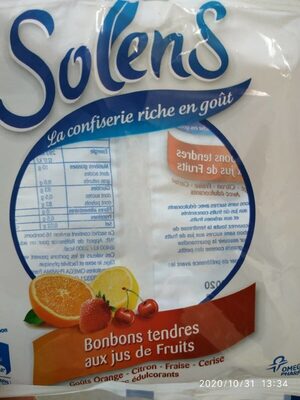
Bonbons tendres au jus de fruits
Solens
Barcode
3595894643770
Category
Snacks, Snacks sucrés, Confiseries, Bonbons
Manufactured In
France
Ingredients
edulcorants
maltitols
mannitol
sucralose
graisse végétale totalement hydrogénée
huile de coprah
acidifiant
acide citrique
jus de fruits concentrés
citron
orange
fraise
cerise
gélatine
émulsifiants
e322
e471
arômes naturels
arôme naturel de citron
arôme naturel d'orange
colorants
curcumine
camins
extrait de paprika
anthocyanes
Status: HALAL
Reason: Sweeteners can be halal; depends on the type used.
Status: HALAL
Reason: Sugar alcohol, plant-derived sweetener.
Uses: sweetening in low-calorie products
Status: HALAL
Reason: Sugar alcohol, derived from natural sources.
Uses: sweetener, food additive
Status: HALAL
Reason: A commonly used artificial sweetener derived from sugar.
Uses: artificial sweetener
Status: UNKNOWN
Status: UNKNOWN
Status: HALAL
Reason: Generally refers to food acids, usually halal.
Uses: acidulant
Status: HALAL
Reason: Common food acid, plant-derived.
Uses: preservative, flavoring
Status: UNKNOWN
Status: HALAL
Reason: Natural flavor derived from lemon.
Uses: flavoring in beverages, desserts
Status: HALAL
Reason: Natural fruit, widely used in food and beverages.
Uses: flavoring in drinks, desserts
Status: HALAL
Reason: Strawberries, plant-based and permissible.
Uses: fresh fruit salad, desserts
Status: HALAL
Reason: Natural cherry flavor, plant-derived.
Uses: flavoring, desserts
Status: MASHBOOH
Reason: Gélatine source unclear; could be pork or halal.
Status: UNKNOWN
Status: HALAL
Reason: Lecithin, derived from soy or egg, an emulsifier.
Uses: emulsifier in foods
Status: HALAL
Reason: Emulsifier derived from plant and animal fats.
Uses: emulsifier in food products
Status: MASHBOOH
Reason: The term 'arômes naturels' (natural flavors) is vague and can derive from both halal and haram sources, making it questionable without specific information about the source of the flavorings.
Uses: Commonly used in food and beverage products to enhance flavor.
Status: HALAL
Reason: Natural flavor extracted from lemons.
Status: UNKNOWN
Status: MASHBOOH
Reason: Generic term; specific source uncertain.
Uses: coloring in food products
Status: HALAL
Reason: Natural pigment from turmeric, Halal.
Uses: coloring in food
Status: UNKNOWN
Reason: Not identifiable as a food additive.
Status: HALAL
Reason: Natural coloring derived from paprika
Uses: Used in food coloring, seasonings
Status: HALAL
Reason: Plant pigments, Halal.
Uses: coloring in food
Nutrition Facts
Energy per 100 g / 100 ml
293 kcal
Energy per 100 g / 100 ml
~ 1215.5 kJ
Fat per 100 g / 100 ml
10 g
Saturated fat per 100 g / 100 ml
9.8 g
Carbohydrates per 100 g / 100 ml
83 g
Sugars per 100 g / 100 ml
0.5 g
Added sugars per 100 g / 100 ml
~ 0 g
Fibre per 100 g / 100 ml
0 g
Protein per 100 g / 100 ml
0.5 g
Salt per 100 g / 100 ml
0.02 g
Sodium per 100 g / 100 ml
0.008 g