MASHBOOH
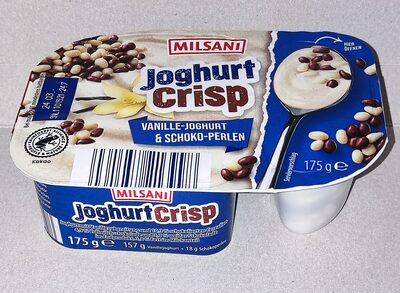
Joghurt-Crisp - Vanille-Joghurt & Schoko-Perlen
Aldi, Milsani, T.M.A.
Barcode
4061458213998
Category
Milchprodukte, Fermentierte Lebensmittel, Fermentierte Milch, Desserts, Milchnachspeisen, en:Fermented dairy desserts, Joghurt, Vanillejoghurts
Manufactured In
Unknown
Ingredients
joghurt
schokolierte cerealien
zucker
vollmilchpulver
kakaobutter
reismehl
weizenmehl
kakaomasse
süßmolkenpulver
überzugsmittel
gummi arabicum
glukosesirup
milchzucker
weizenmalzmehl
gerstenmalz
emulgator
lecithine
speisesalz
natürliches aroma
zucker
natürliches vanille-aroma
färbende pflanzenkonzentrate
saflor
karotte
extrahierte gemahlene vanilleschote
modifizierte stärke
säuerungsmittel
citronensäure
säureregulator
natriumcitrate
Status: UNKNOWN
Status: UNKNOWN
Status: HALAL
Reason: Natural sugar, widely accepted.
Uses: sweetening foods
Status: HALAL
Reason: Derived from milk, generally halal.
Uses: Used in confectionery, dairy products, baked goods.
Status: HALAL
Reason: Cocoa butter derived from cocoa beans.
Uses: fat in chocolates, confections
Status: HALAL
Reason: Rice flour, derived from grinding rice.
Uses: baking, thickening
Status: HALAL
Reason: Wheat flour is plant-based and permissible.
Uses: thickening agent, baking
Status: HALAL
Reason: Kakaomasse is derived from cocoa beans and does not contain any Haram ingredients.
Uses: Used in chocolate production and confections.
Status: UNKNOWN
Status: MASHBOOH
Reason: Ambiguous coating agent, further details needed.
Status: HALAL
Reason: Natural gum derived from acacia trees.
Uses: stabilizer in beverages, food
Status: HALAL
Reason: Glucose syrup is typically made from starch and does not contain any haram ingredients.
Uses: Used as a sweetener, thickener, and to enhance texture in various food products.
Status: HALAL
Reason: Derived from milk, no animal origin involved.
Uses: sweetener in dairy products, chocolates
Status: HALAL
Reason: Malted wheat flour, plant-derived ingredient.
Uses: flour, baking, brewing
Status: HALAL
Reason: Malted barley is plant-based and halal.
Status: MASHBOOH
Reason: Emulgators can be derived from both halal and haram sources. Without specific information on the source, it remains uncertain.
Uses: Emulgators are commonly used in food products to stabilize mixtures such as oil and water, and are found in items like dressings, sauces, and baked goods.
Status: HALAL
Reason: Usually derived from soy or sunflower, plant-based.
Uses: emulsifier, stabilizer
Status: HALAL
Reason: Common seasoning with no Haram components.
Status: MASHBOOH
Reason: The term 'natürliches Aroma' (natural flavoring) can encompass a wide range of substances, some of which may not be halal.
Uses: Commonly used in food products to enhance flavor.
Status: HALAL
Reason: Natural sugar, widely accepted.
Uses: sweetening foods
Status: UNKNOWN
Status: UNKNOWN
Status: HALAL
Reason: Saflor (safflower) is derived from the flower of the safflower plant and is permissible in Islam.
Uses: Used as a cooking oil, coloring agent, and in herbal remedies.
Status: HALAL
Reason: Plant-derived food ingredient.
Uses: vegetable in various dishes
Status: UNKNOWN
Status: HALAL
Reason: Modified starch, generally plant-derived.
Uses: thickening agent
Status: UNKNOWN
Status: HALAL
Reason: Citric acid is a natural preservative from citrus fruits.
Uses: preservative, flavor enhancer
Status: UNKNOWN
Status: HALAL
Reason: Sodium salt of citric acid, plant-derived.
Uses: acid regulator, flavor enhancer
Nutrition Facts
carbohydrates
16
carbohydrates_100g
16
carbohydrates_unit
g
carbohydrates_value
16
energy
561
energy-kcal
130