Checking a product without certification? How to review food without a halal label.
MASHBOOH
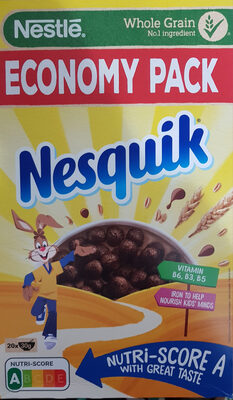
Nesquik Economy Pack
Nesquik,Nestlé
Barcode
5900020021311
Category
Plant-based foods and beverages,Plant-based foods,Breakfasts,Cereals and potatoes,Cereals and their products,Breakfast cereals,Chocolate cereal balls
Manufactured In
-
Ingredients
whole grain wheat flour (53,1%)
sugar
corn grits (17,2%)
glucose syrup
cocoa powder-reduced fat (5,6%)
calcium carbonate
contains sunflower oil and/or palm oil
salt
natural flavors
elemental iron
vitamin b3 (nicotinamide)
vitamin b5 (calcium d-pantothenate)
vitamin d (cholecalciferol)
vitamin b6 (pyridoxine hydrochloride)
vitamin b1 (thiamine hydrochloride)
vitamin b2 (riboflavin)
vitamin b9 (pteroylmonoglutamic acid)
Status: HALAL
Reason: Whole grain wheat is a natural grain and does not contain any ingredients derived from haram sources.
Uses: Used in various food products such as bread, pasta, cereals, and as a source of whole grain nutrition.
Status: HALAL
Reason: Sugar is derived from sugarcane or sugar beets and does not contain any haram ingredients.
Uses: Sugar is used as a sweetener in a variety of food and beverage products.
Status: HALAL
Reason: Corn is a plant-based food that is widely accepted as halal.
Uses: Corn is commonly used in food products, snacks, and as a vegetable or grain in various cuisines.
Status: HALAL
Reason: Glucose syrup is derived from starch, typically corn or wheat, and does not contain any Haram ingredients.
Uses: Used as a sweetener, thickener, and to enhance the texture of food products.
Status: HALAL
Reason: Cocoa is derived from cocoa beans, a plant-based ingredient and is permissible in Islam.
Uses: Used in chocolate, desserts, beverages, and various confections.
Status: HALAL
Reason: Calcium is a mineral that can be derived from various sources, including non-animal sources.
Uses: Commonly used as a dietary supplement and in food fortification.
Status: HALAL
Reason: Derived from sunflower seeds, which are plant-based and permissible in halal dietary laws.
Uses: Commonly used in cooking, frying, and as an ingredient in various food products.
Status: HALAL
Reason: Salt is a mineral primarily composed of sodium chloride and does not contain any haram components.
Uses: Used as a seasoning and preservative in food.
Status: MASHBOOH
Reason: The term 'flavors' is vague and can include both halal and haram sources.
Uses: Used to enhance the taste of food and beverages.
Status: HALAL
Reason: Iron is a mineral and is halal for consumption.
Uses: Iron is commonly used as a dietary supplement and in the fortification of food products.
Status: MASHBOOH
Reason: Nicotinamide is a form of vitamin B3, but its source can vary. If derived from animal products, it may not be halal.
Uses: Nicotinamide is commonly used in dietary supplements and skincare products for its anti-inflammatory and skin-nourishing properties.
Status: HALAL
Reason: Calcium is a mineral that can be derived from various sources, including non-animal sources.
Uses: Commonly used as a dietary supplement and in food fortification.
Status: MASHBOOH
Reason: Vitamin D can be derived from both animal and plant sources; if derived from animal sources, it may not be halal.
Uses: Fortification of foods, dietary supplements.
Status: MASHBOOH
Reason: The source of vitamin B6 can vary; it may be synthetic or derived from non-halal sources.
Uses: Vitamin B6 is commonly used as a dietary supplement and in food fortification.
Status: HALAL
Reason: Vitamin B1, also known as thiamine, is typically derived from sources that are halal, such as grains and legumes.
Uses: Vitamin B1 is used as a dietary supplement and is crucial for energy metabolism in the body.
Status: HALAL
Reason: Vitamin B2 (Riboflavin) is synthetic and does not derive from animal sources.
Uses: Used as a dietary supplement and food additive.
Status: HALAL
Reason: Vitamin B9, also known as folate or folic acid, is a water-soluble vitamin crucial for various bodily functions and is generally synthesized in laboratories from non-haram sources.
Uses: Used as a dietary supplement to support cell growth and metabolism, particularly during pregnancy.
Nutrition Facts
Energy per 100 g / 100 ml
377 kcal
Energy per 100 g / 100 ml
1595 kJ
Fat per 100 g / 100 ml
2.8 g
Saturated fat per 100 g / 100 ml
1.1 g
Carbohydrates per 100 g / 100 ml
75.2 g
Sugars per 100 g / 100 ml
22.4 g
Fibre per 100 g / 100 ml
8.6 g
Protein per 100 g / 100 ml
8.5 g
Salt per 100 g / 100 ml
0.22 g
Sodium per 100 g / 100 ml
0.088 g