Checking a product without certification? How to review food without a halal label.
Barcode
8888010102899
Category
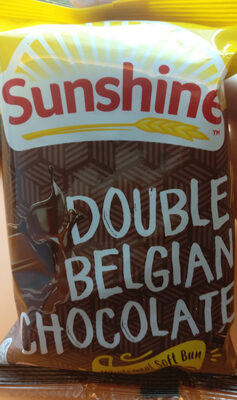
Snacks, Sweet snacks, Biscuits and cakes, Cakes, Chocolate cakes
Manufactured In
Singapore
Ingredients
enriched high protein wheat flour
purified water
fine wholemeal flour
belgian chocolate chips (cocoa mass, sugar, soy lecithin, permitted flavouring), dark chocolate chips sugar, hydrogenated vegetable fat, cocoa powder, soya lecithin, sorbitan tristearate, polyglycerol polyricinoleate, permitted flavouring), granulated cane sugar, belgian cocoa powder, vital wheat gluten, potato flour, sorbitol, baker's yeast, vacuum dried salt, dough conditioner [plant-based emulsifiers and enzymes amylase, hemicellulase, lipase) e341(iii)
e551]
calcium propionate
calcium (calcium carbonate,calcium sulfate)
permitted flavouring
ascorbic acid
iron (ferric phosphate)
soya flour
vitamin b3 (niacin)
vitamin b1 (thiamine)
vitamin b2 (riboflavin)
Status: HALAL
Reason: Wheat flour is derived from wheat, which is a permissible grain in Islam.
Status: HALAL
Reason: Water is a natural substance and is considered pure and permissible in Islam.
Status: HALAL
Reason: Wholemeal flour is made from whole grains and does not contain any haram ingredients.
Status: HALAL
Reason: Yeast is a microorganism used in baking and brewing, which is permissible in Islam.
Status: MASHBOOH
Reason: The input is not a valid ingredient name.
Status: HALAL
Reason: Calcium propionate is a food preservative that is generally considered halal as it is derived from calcium and propionic acid, which are not derived from haram sources.
Status: HALAL
Reason: Calcium is a mineral that is essential for human health and does not derive from haram sources.
Status: MASHBOOH
Reason: Flavouring can contain various substances, some of which may be derived from non-halal sources, making it uncertain without specific details.
Status: HALAL
Reason: Ascorbic acid is a vitamin (Vitamin C) that is typically derived from fruits or synthesized. It does not contain any haram components.
Status: HALAL
Reason: Iron is a mineral and does not contain any animal components or alcohol, making it permissible to consume.
Status: HALAL
Reason: Soya flour is made from soybeans, which are a plant-based ingredient and thus considered halal.
Status: HALAL
Reason: Niacin is a vitamin (B3) that is generally derived from plant or synthetic sources, making it permissible in halal diets.
Status: HALAL
Reason: Vitamin B1 (Thiamine) is a naturally occurring vitamin that does not contain any haram ingredients.
Status: HALAL
Reason: Vitamin B2, also known as riboflavin, is a vitamin that is generally derived from plants or synthesized in labs and does not contain any haram components.
Nutrition Facts
Energy per 100 g / 100 ml
269 kcal
Energy per 100 g / 100 ml
1125 kJ
Fat per 100 g / 100 ml
5.4 g
Saturated fat per 100 g / 100 ml
3.8 g
Carbohydrates per 100 g / 100 ml
44.8 g
Sugars per 100 g / 100 ml
14.7 g
Fibre per 100 g / 100 ml
5.3 g
Protein per 100 g / 100 ml
10.3 g
Salt per 100 g / 100 ml
0.59182 g
Sodium per 100 g / 100 ml
0.236728 g