MASHBOOH
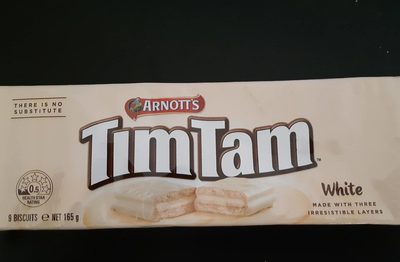
TimTam White
ARNOTT'S
Barcode
9310072025155
Category
Snacks,Sweet snacks,Biscuits and cakes,Biscuits
Manufactured In
Australie
Ingredients
sugar
vegetable oil
wheat flour
dry matter of milk
emulsifiers (e322 : soy, e476)
salt
flavours
leavening agent (e500)
colour (annatto extract)
Status: HALAL
Reason: Sugar is derived from sugarcane or sugar beets and does not contain any haram ingredients.
Uses: Sugar is used as a sweetener in a variety of food and beverage products.
Status: HALAL
Reason: Typically derived from plants and does not contain any animal products.
Uses: Used in cooking, frying, baking, and food preparation.
Status: HALAL
Reason: Wheat flour is derived from wheat, which is a plant-based ingredient and permissible in Islam.
Uses: Wheat flour is commonly used for baking bread, pastries, and other baked goods.
Status: HALAL
Reason: Milk is a natural product derived from animals that are permissible in Islam, provided they are halal.
Uses: Milk is used for drinking, in cooking, and as an ingredient in various food products such as cheese and yogurt.
Status: HALAL
Reason: E322 is derived from soy, which is halal. E476 is a glyceryl ester of fatty acids that can be sourced from halal or non-halal origins, but is generally considered halal when derived from plant sources.
Uses: Used as stabilizers and emulsifiers in food products to maintain texture and consistency.
Status: HALAL
Reason: Salt is a mineral primarily composed of sodium chloride and does not contain any haram components.
Uses: Used as a seasoning and preservative in food.
Status: MASHBOOH
Reason: The specific source of flavours is often not disclosed, and they can be derived from halal or haram substances.
Uses: Used to enhance taste in food and beverages.
Status: MASHBOOH
Reason: E500 can refer to sodium bicarbonate or magnesium carbonates, which may be derived from halal or haram sources. Further clarification on the specific type or source is needed.
Uses: Used as a rising agent in baking, stabilizer in food products.
Status: MASHBOOH
Reason: The ingredient name is not valid or specific enough to determine its status.
Uses: Unknown
Nutrition Facts
carbohydrates
11.9
carbohydrates_100g
65
carbohydrates_serving
11.9
carbohydrates_unit
g
carbohydrates_value
11.9
energy
408